Putting LVP in a Calgary Basement: What to Check First
Short answer: Test the slab for moisture, fix any water problem, make the floor flat, then choose the underlay and product that match the space.

Start with moisture
Concrete can hold and release moisture. Manufacturers usually specify a testing method and a limit, such as a maximum relative humidity reading from an in-slab probe. If the slab is too wet or has leaks, solve that before any flooring goes on.
Make it flat
Floating floors depend on flat subfloors. Many manufacturers allow only a few millimetres of variation over a couple of metres, so low spots are filled and high spots are ground down.
Underlay and cold floors
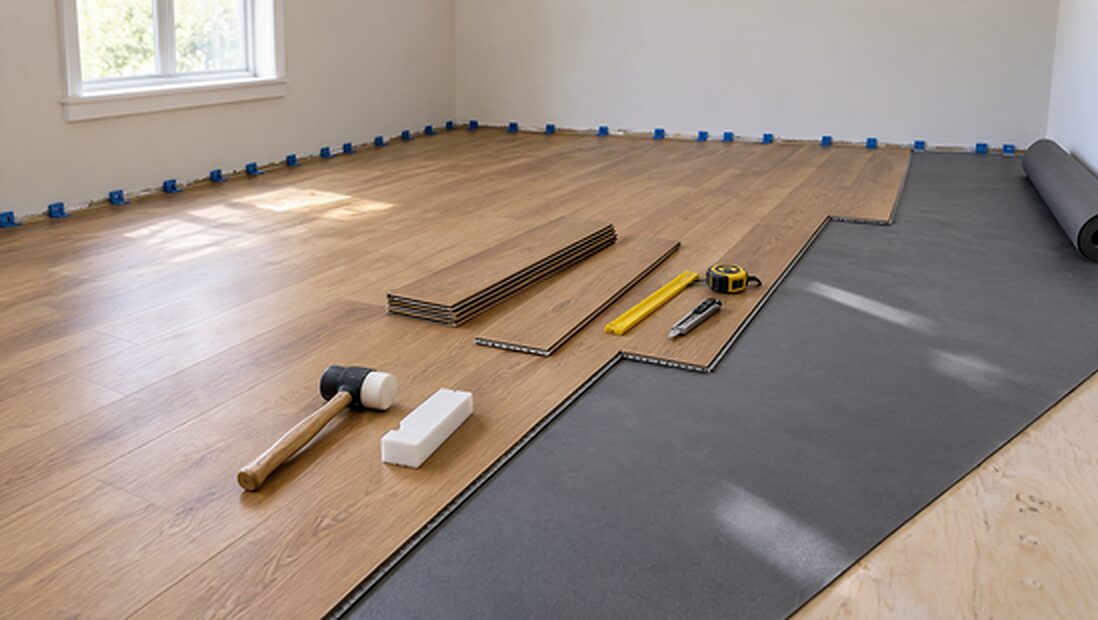
Some planks have underlay attached. Others need a separate underlay or a dimpled panel. Check what your product allows, because the wrong underlay can void a warranty.
Plan around the details
- Leave expansion gaps at walls, posts and stair bases
- Plan transitions at utility rooms
- Keep baseboards off the floor so planks can move
- Keep the heat on while installing, as recommended by the manufacturer
After installation
Keep humidity reasonable, wipe up leaks quickly, and avoid rubber-backed mats that may stain some vinyl floors. Check the manufacturer care guide.